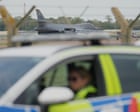
RAF Typhoon Fighters Deployed to Defend Saudi Arabia
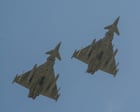
RAF Typhoon Fighters Launched for Saudi Arabia Protection
The United Kingdom has announced a significant military deployment of RAF Typhoon fighters to Saudi Arabia, marking an intensified commitment to regional security and defense. RAF Typhoon fighters will conduct defensive aerial operations across Saudi Arabian airspace, safeguarding vital cities and strategic infrastructure from hostile threats. This deployment represents one of the most consequential military decisions authorized under the current government's administration, demonstrating Britain's commitment to supporting its Middle Eastern allies.
Mission Objectives and Operational Scope
The RAF Typhoon fighters assignment involves comprehensive air defense operations designed to intercept and neutralize aerial threats originating from Yemen-based militant groups. British military pilots will undertake patrol missions over populated centers and economically critical facilities, including major transportation hubs and energy production sites that have previously fallen victim to aerial bombardment. The operation focuses on defensive engagement protocols, with RAF personnel trained to identify, track, and eliminate incoming hostile aircraft and unmanned systems before they reach their intended targets.
Targeting Houthi Aerial Threats
Yemen's Houthi movement has conducted numerous coordinated attacks against Saudi Arabian assets, utilizing both advanced missiles and remotely piloted drone systems. These assault campaigns have specifically targeted commercial aviation infrastructure and petroleum extraction facilities, creating substantial economic disruption and security concerns throughout the Arabian Peninsula. The deployment of RAF Typhoon fighters aims to establish a protective aerial barrier capable of responding immediately to detected threats. Intelligence assessments indicate that hostile forces possess sophisticated weaponry capable of traveling considerable distances, necessitating enhanced defensive capabilities provided by experienced NATO-aligned air forces.
Western Allied Support and Regional Implications
This British military initiative occurs within a broader context of expanding western intervention throughout the Middle Eastern conflict zone. Multiple allied nations have increased military commitments to regional stability operations, with coordination between defense establishments becoming increasingly sophisticated. The RAF Typhoon fighters deployment aligns with established partnerships between London and Riyadh, reflecting decades of security cooperation and mutual strategic interests. Such collaborative defense measures underscore the interconnected nature of modern geopolitical challenges and the necessity for coordinated international responses to emerging security threats.
Political Context and Government Authorization
The decision to deploy RAF Typhoon fighters received high-level governmental authorization, representing a substantial commitment of military resources and personnel. This operation constitutes a major foreign policy initiative undertaken by current leadership, reflecting serious assessments of regional security requirements. The approval process involved detailed consultations between defense officials, intelligence agencies, and diplomatic representatives to ensure comprehensive alignment with national security priorities. Such significant military deployments typically require extensive planning, logistical coordination, and inter-agency collaboration to guarantee operational effectiveness and personnel safety.
Operational Capabilities and Fighter Specifications
The RAF Typhoon represents cutting-edge fighter jet technology, equipped with sophisticated sensor systems, advanced weaponry, and exceptional maneuverability characteristics. These aircraft possess the technical capabilities necessary for sustained defensive operations across diverse operational environments. RAF Typhoon fighters can execute rapid interception procedures, maintain extended patrol patterns, and engage multiple simultaneous threats through integrated targeting systems. The selection of this particular aircraft demonstrates confidence in its proven combat performance and operational reliability within demanding operational theaters.
Strategic Importance and Future Considerations
The deployment of RAF Typhoon fighters to Saudi Arabia signals a substantial escalation in direct military involvement within the Yemen conflict sphere. This action reinforces Britain's security commitments to regional partners while demonstrating tangible capability to address emerging threats. Future operations will likely depend on evolving security assessments, diplomatic developments, and broader international responses to conflict dynamics throughout the Arabian Peninsula. The continued presence of RAF Typhoon fighters represents a sustained commitment requiring ongoing resource allocation, personnel rotation protocols, and logistical support infrastructure to maintain operational effectiveness throughout the designated mission duration.